
Recently, there has been another price hike for fuel in South Africa and the responses toward this has been mostly a feeling of concern. We know that when the fuel price goes up, so do most other prices such as public transport, food and general supplies necessary for business and homes alike. The question that we have to ask ourselves is, how are we going to manage this? Let’s dive into it!
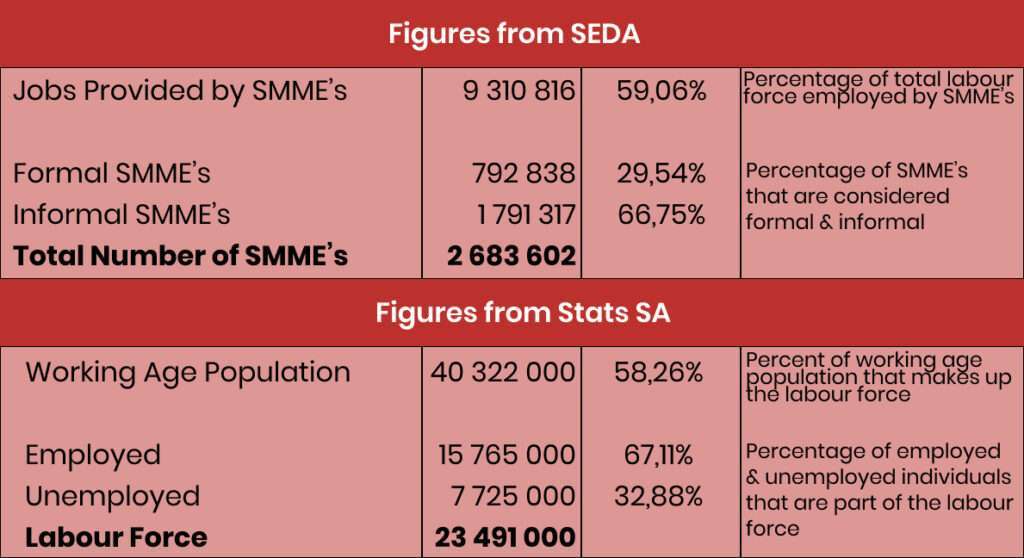
To get started, let’s get the figures out of the way. The following table shows some employment statistics in South Africa, focusing on SMME’s (Small, Medium & Micro Enterprises). The figures are from publications released by StatsSA & SEDA on the 3rd quarter of 2022:
What does the information tell us?
According to the labour force survey done by Stats SA, only 58,26% of the working age population is part of the labour force of South Africa, and of this labour force, 67,11% is employed and 32,88% is unemployed. Of those that are employed, 59,06% are employed by SMME’s which illustrates the importance of this sector in South Africa.
As with any price hike, those most affected by it are lower income homes and businesses, this means that there is definitely a chance that SMME’s in South Africa are feeling the pinch of the current state of the economy. This may look different for each business and individual, but the similarity is that there has to be plans in place to mitigate the effects of the potential instability it could create.
Strategic Plans
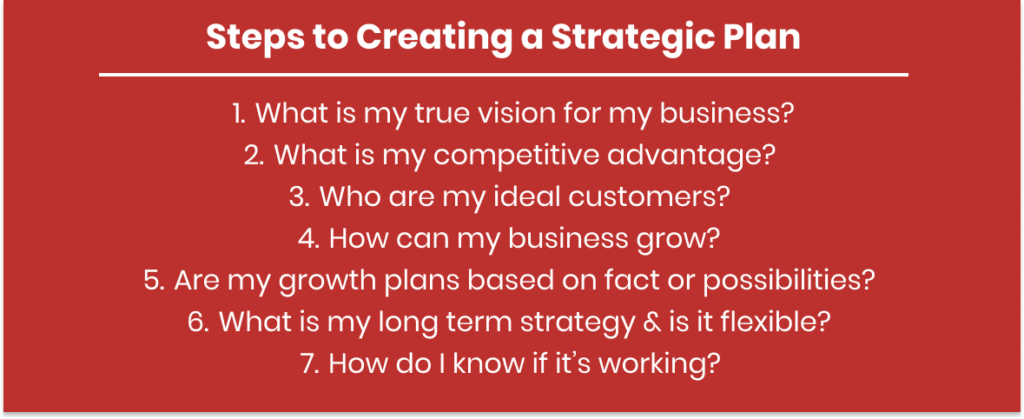
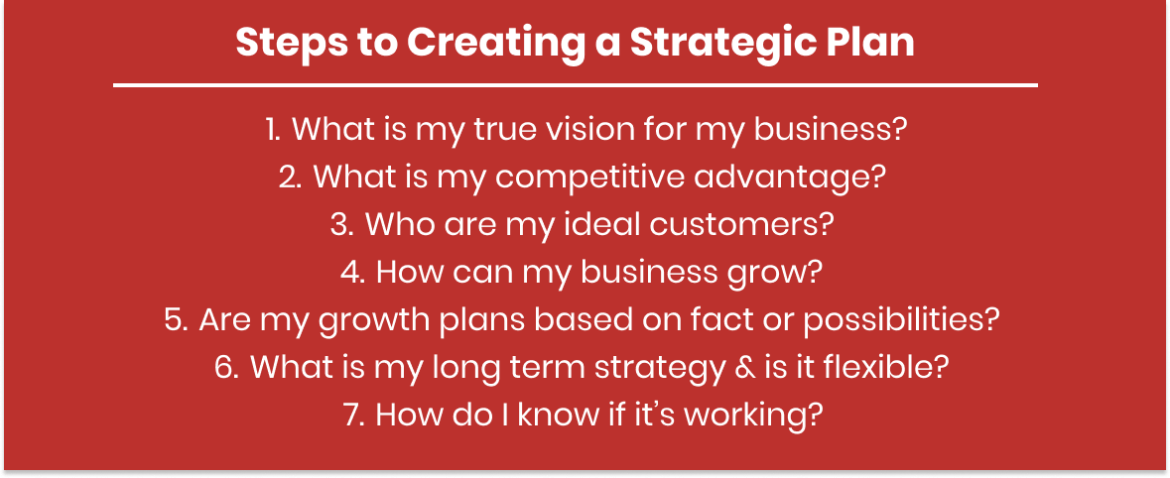
All businesses should have a strategy in place that guides them towards their ultimate goal, which is to provide a product or service for a profit. Some businesses have detailed strategic plans that have failsafe measures in place for events that may alter the strategy. Other businesses may deal with a fallout as it occurs. However, this does not always work out favourably. Some key factors to creating a good strategic plan includes the following:
1. What is my true vision for my business?
You have to be passionate about the product or service you are going to provide. It may seem like an overused term but passion can become the driving force of a successful business if it is used in a way that translates into risk managed decisions. If you are passionate about your business, it becomes easy to visualise what you want for your customers and how you want your customers to feel about your business. Ultimately the business or individual that you provide your product or service to, becomes a key part of your strategic plan. It influences the decisions you make in order to be successful.
2. What is my competitive advantage?
What need or want is your product or service able to fulfil? Is it priced low enough for customers to want to buy it & high enough to make profit? Competitive advantage is not one single factor that makes your product or service better than your competitor. Competitive advantage should be considered in a holistic approach. It includes fulfilling needs and wants, pricing structures, marketing methods, company environment and productivity levels, and competitor evaluation.
3. Who are my ideal customers?
This is referred to as your target market. The businesses or individuals that will purchase from you. Are you going to sell to businesses or individuals? Where are they located? What are their ages? What are their interests? These questions help you shape your strategy and your marketing plans for your business.
4. How can I grow?
As mentioned before, the ultimate goal of a business is to provide a product or service while making a profit. But you cannot become stagnant. The business has to have growth potential and the ability to employ more people as the need arises. For the business to grow, you need capital for your costs that include everything the business uses to provide the service or manufacture a product – the business can grow by selling to more customers, reducing operating costs, and expanding the product or service range. Key questions to ask yourself is how can I grow the business and am I able to manage the scaling of the business?
5. Are my growth plans based on fact or possibilities?
It’s important that the answer to question 4 has been answered based on research and not based on a pipe dream. Research includes figures, conversations, questionnaires and anything that is able to provide statistics on the probability of success.
6. What is my long term strategy & is it flexible?
A good strategic plan has the flexibility within it for any outcome. Strategic plans are done based on an idea, the implementation of the idea and research to support it. The research that supports the plan should have a good amount of risk assessment involved and a management plan for risk should it become a reality. Strategic plans should include all departments or sections of a business and take into account the relevant managers of these departments. Strategic plans happen at different levels of a business that each have a time frame.
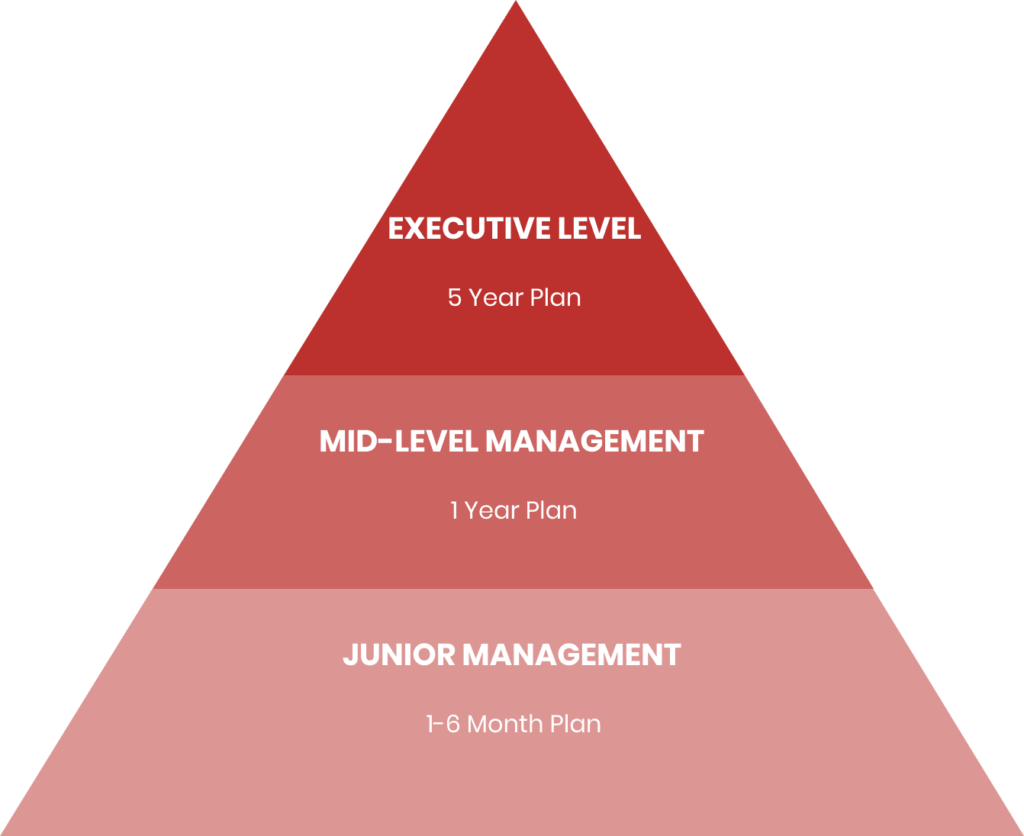
Executive Level – 5 Year Plan
Focuses on achieving long-term goals that build & grow the business.
Mid-Level Management – 1 Year Plan
Focuses on achieving medium-term goals that work on a functional level.
Junior Management – 1-6 Month Plan
Focuses on immediate plans for business operation.
7. How do I know if it’s working?
Decide on the key metrics that are involved in your plan that is going to help you measure the success or failure of the plan. Ensure these metrics are regularly updated and use these metrics to make changes to your mid level management and junior management plans.
The importance of marketing your SMME
Strategic plans focus on the business as a whole and how all the parts and functions of the business have to work together in achieving the business goals. A massive part of achieving these goals is the ability to market your product or service to your target audience.
There are various methods of marketing available. One of the most popular and trending methods of marketing is using social media and engaging with your followers in a meaningful way that build brand trust and credibility. Social media marketing is part of the digital marketing efforts of a business and it takes time and patience to build it and create a success of your efforts.
A traditional method of marketing that is still a popular choice in South Africa is the use of print media to market your brand. As we are a developing country, print media is still necessary to get your message across to consumers. As mentioned in our previous article Print Media in South Africa, print media is a great way to build credibility and it has a trustworthiness that digital media may not have just yet.
As always, contact us for your printing needs! We are happy to provide you with quotations that are negotiable to your budget and printing requirements.
Leave a Reply